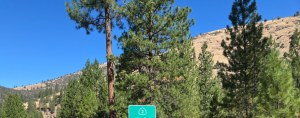
The East Fork Scott River Forest Health Implementation Project (Project) will implement up to 263 acres of vegetation treatments to improve and protect wildlife habitat, improve forest health, create climate resilience and reduce the risk of uncharacteristic large wildfires in the East Fork of the Scott River watershed. The East Fork Scott River watershed, located near Callahan, CA in Siskiyou County, faces challenges with overly dense forest stands as a result of past forest management and heightened tree mortality due to prolonged drought impacts. The Wildlands Conservancy (TWC), owner of the 6,094 Beaver Headwaters Preserve, is seeking to execute comprehensive forest habitat restoration efforts across its ownership. This project, encompassing upland vegetation treatment aims to protect and improve wildlife habitat, employ local residents, foster long-term carbon sequestration, enhance ecological health, and improve water quality and quantity.
This Project adds to and compliments three recently completed projects aimed at restoring the structure of the forest landscape. With USFWS funding, 200 acres of oak woodland restoration was completed in 2023/24 by hand thinning encroaching conifers and piling and burning biomass material. The Scott River Watershed Council (SRWC) and TWC recently completed a forest health project on approximately 90 acres to remove dead and dying conifers that were affected by drought and insect damage. Some of these trees were utilized for instream fish habitat structures. Additionally, the US Forest Service (USFS) has completed forest health thinning treatments along Hayden Ridge and in Noyes Valley on federal lands adjacent to the preserve as part of the East Fork Scott project. The Project targets high density conifer stands in between these three project areas to connect treatment areas and create a more continuous, landscape scale restoration effort across administrative boundaries. Methods of treatment will include mastication, manual thinning, hand piling, pile burning, and pruning of overly dense conifer stands and limited amounts of chaparral.
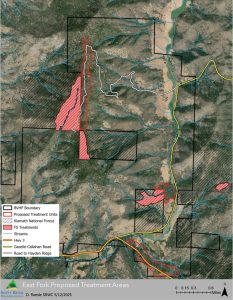
The project focuses on improving and protecting wildlife habitat and improving forest health of three separate areas:
The first area is along Hayden Ridge. Hayden Ridge is a defining geologic feature separating Noyes Valley from Scott Valley with the town of Callahan located at the southern end of the ridge. 128 acres on Hayden Ridge will be treated with mastication, chipping, pruning and prescribed burning. The proposed treatment area has been logged in the past. The stand that has regenerated after past logging is mostly high density Ponderosa pine that has lacked disturbance from naturally occurring fires. The current conditions on Hayden Ridge are densely populated Ponderosa pine stands with stems per acre as high as 950 in some areas. Stocking levels for Ponderosa pine and mixed conifer stands in the region were historically highly variable ranging from 6 trees per acre (TPA) to 127 TPA . Thinning small diameter trees in these stands will have multiple benefits– protecting wildlife habitat by decreasing the probability of stand replacing fires, enhancing tree species diversity and structural diversity by thinning and creating a mix of canopy heights, ages and gaps to create diverse habitats. Thinning will occur around oaks to protect existing oaks, promote regeneration and increase the production of acorns for wildlife.
The second area focuses on the treatment of 97 acres of dense small diameter mixed conifer stands located between the East Fork Scott River and CA-Hwy 3. Treatment of these areas will include thinning, pruning, hand piling and burning. Where possible thinning will occur around oaks to increase tree vigor and acorn production. This area has had past logging and the regenerated forest is overly dense having lacked natural disturbance from fire. Thinning treatments will protect wildlife habitat by decreasing the probability of stand replacing fires, enhance tree species diversity, increase structural diversity by thinning and creating a mix of canopy heights, ages and gaps to create diverse habitats. The benefits of these treatments are primarily to protect and enhance wildlife habitat and improve forest health, an added co-benefit is improved ingress/egress along Highway 3 for the town of Callahan.
The third treatment area is 38 acres of oak woodland and mixed oak-conifer forest situated at the base of Hayden Ridge to the east of the Gazelle-Callahan Road. This area contains high density Ponderosa pine stands with suppressed oaks in the understory. Treatments will thin around existing oaks and larger diameter Ponderosa pine to increase average stand diameter and improve the health of oak woodlands/mixed oak-conifer forests which provide vital food sources for an abundance of wildlife. Treatment of this area will include manual thinning, pruning, hand piling and pile burning. Treating this area will connect treatments on USFS property to areas treated by USFWS to promote landscape scale forest health efforts.
Under current conditions, the overstocked forest stands targeted for this project face significant threats from drought, extreme temperatures, forest pests, and the risk of high-intensity wildfires. Implementing this project will provide substantial benefits to wildlife, forest health and the surrounding communities. The proposed treatments will reduce competition among trees and enhance resistance to pests, diseases, and drought. The treatments will also promote a more diverse forest structure, with varying tree sizes, ages, and species. Such structural diversity supports a broader range of plant and animal species, fostering a more robust and ecologically balanced environment. As the canopy is opened through thinning, it will allow more light to reach the forest floor, creating conditions that are favorable for the growth of grasses and forbs. These understory plants are vital for increasing plant diversity, supporting a range of pollinators, and providing food and cover for a variety of wildlife. Patches of small diameter trees or shrubs will be retained to provide sight distance cover for large mammals and cover for small mammals and nesting birds.
Funding for this North Coast Resource Partnership (NCRP) CAL FIRE Forest Health Pilot subproject was provided by CAL FIRE’s Forest Health Program, through the NCRP as part of California Climate Investments. California Climate Investments is a statewide program that puts billions of Cap-and-Trade dollars to work reducing GHG emissions, strengthening the economy, and improving public health and the environment – particularly in disadvantaged communities. The Cap-and Trade program also creates a financial incentive for industries to invest in clean technologies and develop innovative ways to reduce pollution. California Climate Investments projects include affordable housing, renewable energy, public transportation, zero-emission vehicles, environmental restoration, more sustainable agriculture, recycling, and much more. At least 35 percent of these investments are located within and benefiting residents of disadvantaged communities, low income communities, and low-income households across California. For more information, visit the California Climate Investments website at: http://www.caclimateinvestments.ca.gov.
PUBLIC NOTICE
| Funder | Contract # | Start Date | End Date | Funding Source | Land Ownership | Award Amount |
| NCRP | 8GG22628 | 6/17/25 | 12/31/28 | State | Private | $970,119 |